


Going Balls
Supersonic Studios LTD
I expected a simple rolling game, but Going Balls quickly showed why this kind of casual game can be so difficult to put down. You guide a ball across suspended platforms, deal with sudden changes in the path, and try to keep moving without falling. The basic idea is easy to understand in seconds, yet the changing layouts create enough tension to make even a short attempt feel meaningful.
After spending time with it, I see the game as a strong fit for people who want quick bursts of play rather than a large story, a complicated upgrade system, or a long tutorial. It comes from Supersonic Studios LTD and is free to start, with optional in-app purchases ranging from $0.99 to $29.99 per item. That makes the first step painless, although the purchase options are worth keeping in mind if you prefer games with no spending prompts at all.
Why the first few runs work so well
The opening appeal is immediate. There is no need to learn a character class, remember a map, or understand a deep set of controls before playing. The ball moves through a narrow platform course, and my attention goes straight to steering, balance, and the next obstacle. That simplicity is the right choice for a game designed around quick decisions.
What makes the early experience more than a basic reflex exercise is the way the course can surprise me. A route that looks safe at first may demand a sharper correction a moment later. The challenge is not based on reading long instructions; it comes from watching the path and reacting before the ball drifts too far. I can understand the goal instantly, but I still need practice to handle the movement consistently.
The controls are most enjoyable when I treat them as a matter of small adjustments rather than dramatic swipes. Overcorrecting is often more dangerous than moving too little. That is one of the first useful lessons I picked up: keeping the ball roughly centered gives me more room to respond when the platform changes direction or narrows.
Related News

Why WhatsApp Messenger Still Makes Everyday Communication Feel Easy

Jurassic World: The Game Is the Better Dino Tycoon for Strategic Players

Threads in Real Life: Who Should Join, Lurk, or Leave

How SHEIN Turned Shopping Into an Endless Content Feed

How to Make Fortnite Feel Smarter on Mobile

Should You Switch to Microsoft Outlook on Mobile?
This also gives the game a pleasant learning curve for a casual title. I do not feel blocked by a complicated system, but I do notice improvement from one attempt to the next. When I fail, I usually understand that my timing or positioning was off. That clarity is important because it encourages another try instead of making the result feel random.
The game is rated for Everyone, which matches its approachable presentation and straightforward objective. Families can hand it to a younger player without first explaining a complicated fictional world, while adults can use it as a quick distraction. The simplicity does not mean every section is easy, though. The later a run goes, the more concentration matters, and a relaxed first impression can turn into a surprisingly focused challenge.
A rhythm built for spare minutes
My favorite way to play is in short sessions. It works well when I have a few minutes before leaving the house, while waiting for an appointment, or when I want a break from a more demanding game. I can start almost immediately, make a few attempts, and stop without feeling that I abandoned a long quest.
Gallery
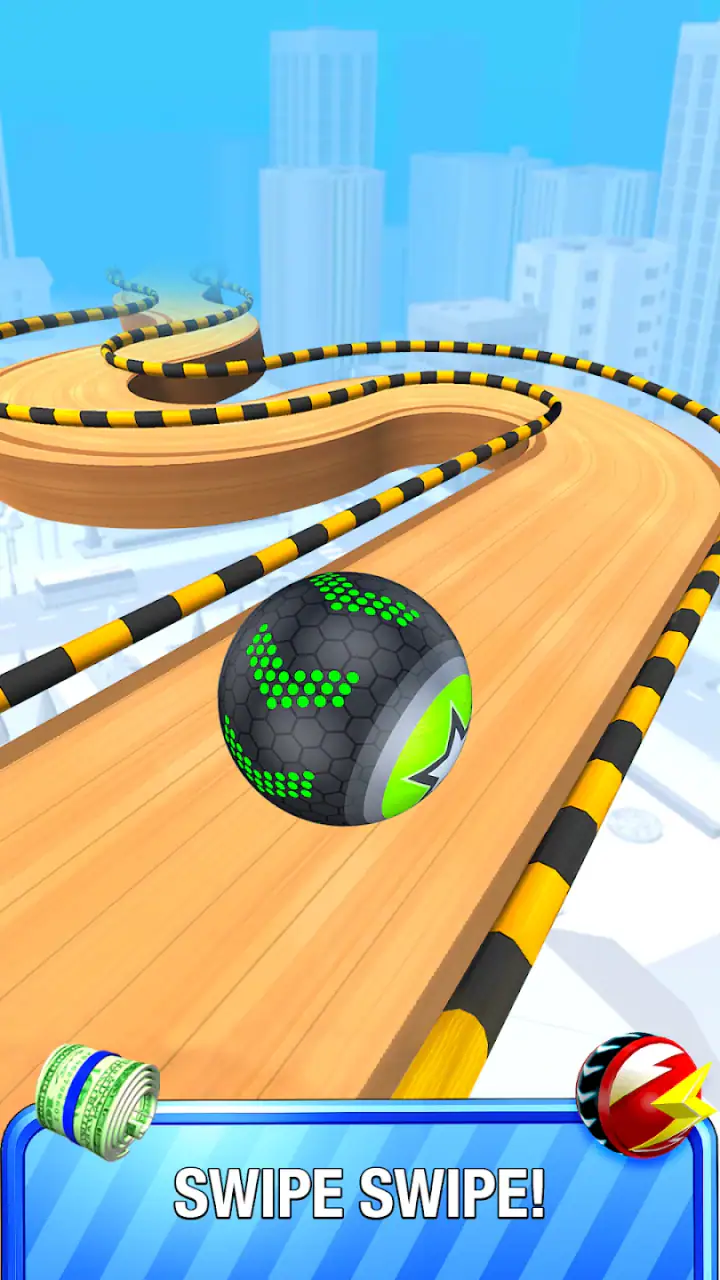
That short-session design depends on the game making failure understandable. Here, a missed turn or a fall generally feels connected to what I just did. I can remember the problem and adjust on the next run. This creates a compact loop: begin, read the path, react, fail or progress, then decide whether I want another attempt.
There is also a useful difference between playing for progress and playing for practice. If I am simply trying to move forward, I may rush and make careless corrections. If I focus on learning the movement, I start paying attention to how much space I have before a turn and how early I should prepare for the next section. That change in mindset makes the game feel less like repeated failure and more like a small skill exercise.
The best sessions are short enough to respect your time but focused enough to reward attention. I would not choose this as my main game for an evening of deep immersion, yet it is excellent when I want something that begins quickly and does not require a large commitment.
What happens when real life interrupts
Interruption tolerance is one of the most important tests for a casual mobile game. I often play in situations where a message, conversation, or sudden task can pull me away without warning. A game can be mechanically enjoyable and still be inconvenient if stopping feels costly.
Going Balls is easier to fit into that kind of routine than a game that expects a long uninterrupted match. Its basic challenge is divided into manageable attempts, so I am not preparing for a lengthy battle or trying to remember a complicated objective after stepping away. If I need to stop, the natural break between attempts makes returning less intimidating.
Still, I would avoid starting a run when I already know I may be interrupted in the next few seconds. The ball keeps demanding attention while it is moving, and a sudden distraction can turn a good attempt into a fall. That is not a flaw in the controls; it is simply the trade-off of a game built around continuous steering. It is interruption-friendly at the session level, not necessarily at every moment inside a run.
For a practical routine, I play one or two attempts during a small gap, then close the game before I become frustrated. This works better than chasing a perfect result while multitasking. The game rewards looking at the screen, so it should not be treated as background entertainment that can be played safely while doing something else.
Returning after a break is straightforward because there is no large story to reconstruct. I do not need to remember a cast of characters or a chain of objectives. I can pick up the movement again by starting with a cautious run. That makes it more welcoming than many casual games that appear simple but gradually fill the screen with systems, timers, and tasks.
The pleasure of movement and the cost of repetition
The strongest feeling comes from controlling momentum through a route that looks deceptively manageable. A successful section gives me a small sense of flow: I line up the ball, make a correction, stay on the platform, and continue before hesitation causes trouble. The pleasure is immediate and physical in a way that many tap-based casual games are not.
That same structure creates the main limitation. The central activity remains steering a rolling ball through obstacle-filled paths. If you need a changing narrative, varied character abilities, or a broad collection of unrelated mini-games, this may feel narrow. The game has a clear identity, but it does not try to become something else.
Repetition is therefore both its strength and its weakness. The repeated control loop is easy to understand and satisfying when I am improving. It becomes less appealing when I am no longer learning from mistakes and am simply repeating the same kind of attempt. My interest lasts longer when I set a small goal, such as reaching a difficult section or improving my control, rather than playing without a purpose.
One useful approach is to change how you judge a run. Instead of asking only whether you finished, notice whether you entered a turn with better positioning, recovered from a wobble, or avoided the correction that caused an earlier fall. This turns small improvements into progress even when the overall result is not perfect.
Another practical tip is to avoid playing while tired if you are trying to advance. The controls are simple, but simple controls can expose impatience. When my attention drops, I tend to make larger movements and react late. A short break often helps more than immediately starting another frustrated attempt.
How it compares with other casual choices
Compared with an endless runner, this game feels more deliberate. Endless runners often emphasize automatic forward motion and rapid lane changes, while Going Balls puts more attention on keeping a rolling object aligned with the available surface. That makes each turn feel more like a positioning problem than a race reaction.
It also differs from match-three games and idle games, which are usually easier to play while only partly focused on the screen. Here, the immediate pleasure comes from active control, so I get more satisfaction when I am fully engaged. In return, I cannot enjoy it as casually during a conversation or while watching something else.
Compared with physics puzzle games, it is less about solving a fixed arrangement through experimentation and more about maintaining control during movement. I do not spend as much time planning a sequence of actions before starting. The challenge arrives while the ball is already in motion, which gives the experience a livelier pace but leaves less room for careful, turn-by-turn planning.
For players who enjoy precision platforming but do not want a large console-style adventure, this is a convenient middle ground. It offers a taste of timing and control without demanding a major commitment. On the other hand, someone looking for a substantial campaign, rich customization, or a strong sense of narrative should choose a different type of game.
Who will enjoy it, and who should skip it
I would recommend it to people who like games that explain themselves through play. It is especially suitable for commuters, students taking short breaks, and anyone who wants a quick reflex challenge that can be understood immediately. It can also work for families because the objective is clear and the age rating is Everyone.
It is a good choice if you enjoy retrying a difficult section and learning from small mistakes. The game gives that kind of player a reason to continue: the rules stay simple, while your control gradually becomes more reliable. It is less suitable for someone who dislikes repeating failed attempts or who expects every new session to introduce a completely different activity.
I would also be cautious if you prefer a calm game with almost no pressure. Although the presentation is casual, the need to keep the ball on the route can become tense, especially when you are close to making progress. It is relaxing when played without a goal, but it can become demanding when you start chasing a better result.
Spending is another personal consideration. The game is free to download and play, but optional purchases are available. I can see why some players may appreciate having extra ways to support or enhance their experience, while others may prefer a completely purchase-free environment. If you are sensitive to in-app offers, keep that preference in mind before settling into the game.
What the numbers suggest about its place on mobile
The game has reached over 100 million installs, with an average rating of 4.3 from around 931 thousand ratings and about 11 thousand written reviews. Those figures do not replace personal experience, but they do fit what I found: the concept is easy to understand, the first session is accessible, and the challenge has enough bite to keep many players returning.
It was released on February 2, 2021, and the current version is 3.13. Compatibility begins with Android 7.0, which makes it available to a broad range of Android devices. I would still pay attention to how your own phone handles touch response and performance, because a reflex game is more enjoyable when movement feels immediate and the screen is comfortable to watch.
The developer, Supersonic Studios LTD, has kept the identity focused on quick rolling-platform play rather than turning it into a crowded collection of unrelated features. That focus is a major reason the game is easy to return to. It is also why the experience may eventually feel familiar if you play for long stretches every day.
My everyday way of using it
In a normal day, I would use this as a reset between tasks rather than as a primary entertainment session. After finishing a piece of work, I can play a couple of attempts, notice whether my hands and attention are actually ready for the challenge, and then stop. That makes it useful as a small mental change of pace without requiring me to remember a plot or manage a long-term inventory.
If I have more time, I prefer setting a limit before I begin. For example, I might play until I make a few careless falls, then take a break instead of allowing repetition to turn into irritation. This is a surprisingly important habit for a game with such a compact loop. The same immediacy that makes it attractive can also encourage automatic retries.
For younger players, I would suggest treating it as a shared challenge rather than handing over the device with the expectation of endless play. Watching someone else attempt a difficult path can be entertaining, and discussing when to slow down or make a smaller correction adds a little more variety to the basic loop.
My casual verdict
Going Balls succeeds because it understands the value of a clear first minute. I know what to do almost immediately, and the rolling movement gives the game more hands-on character than many other casual time-fillers. It is quick to launch, easy to revisit, and satisfying when I can see my control improving.
Its limits are equally clear. The core activity can become repetitive, interruptions during an active run can be costly, and players who want a story or extensive variety will probably outgrow it. The free entry is welcome, but the presence of optional purchases means it is not the best match for someone seeking a completely distraction-free mobile experience.
For me, the right way to enjoy it is in controlled bursts: focus for a few attempts, learn from the route, stop before frustration takes over, and return later. That approach preserves the immediate pleasure and keeps repetition from becoming a chore. If you want a casual game built around quick reactions, visible improvement, and short sessions, I think it is worth trying. If you need deep content or constant novelty, I would look elsewhere.
My recommendation is simple: choose it for focused minutes of rolling-platform challenge, not for a long-form adventure. In that role, it is polished enough to earn a place on my phone, especially when I want something that starts instantly and gives me a small but genuine reason to try one more run.
FAQs for Going Balls
What is the main objective of Going Balls?
Going Balls is a dynamic arcade game where the primary objective is to navigate a ball through a series of challenging courses. Players must control the speed and direction of the ball, overcoming obstacles and collecting coins to progress through levels and unlock new features.
How do the controls work in Going Balls?
The controls in Going Balls are intuitive and user-friendly. Players swipe left or right on the screen to change the direction of the ball. Mastering these controls is essential for maneuvering through tight spaces and avoiding obstacles while maintaining the ball's speed.
Are there in-app purchases in Going Balls?
Yes, Going Balls offers in-app purchases. Players can buy coins or special balls to enhance their gameplay experience. However, these purchases are optional, and players can still enjoy the game and progress without spending real money.
Is Going Balls suitable for all age groups?
Going Balls is designed to be accessible and fun for players of all ages. Its simple mechanics and colorful graphics make it appealing to both younger audiences and adults looking for a casual gaming experience. Parental guidance is recommended for younger children due to in-app purchase options.
Does Going Balls require an internet connection to play?
Going Balls can be played offline, allowing users to enjoy the game without an internet connection. However, some features, such as leaderboards and in-app purchases, require an active internet connection to function properly.
Pros
- Intuitive controls make gameplay engaging.
- Vibrant graphics enhance user experience.
- Frequent level updates keep it fresh.
- Offline mode available for on-the-go play.
- Simple yet addictive game mechanics.
Cons
- In-app ads can be intrusive.
- Requires precise timing
- may frustrate some.
- Limited customization options.
- Lacks a multiplayer mode.
- Requires regular updates for smooth play.


